
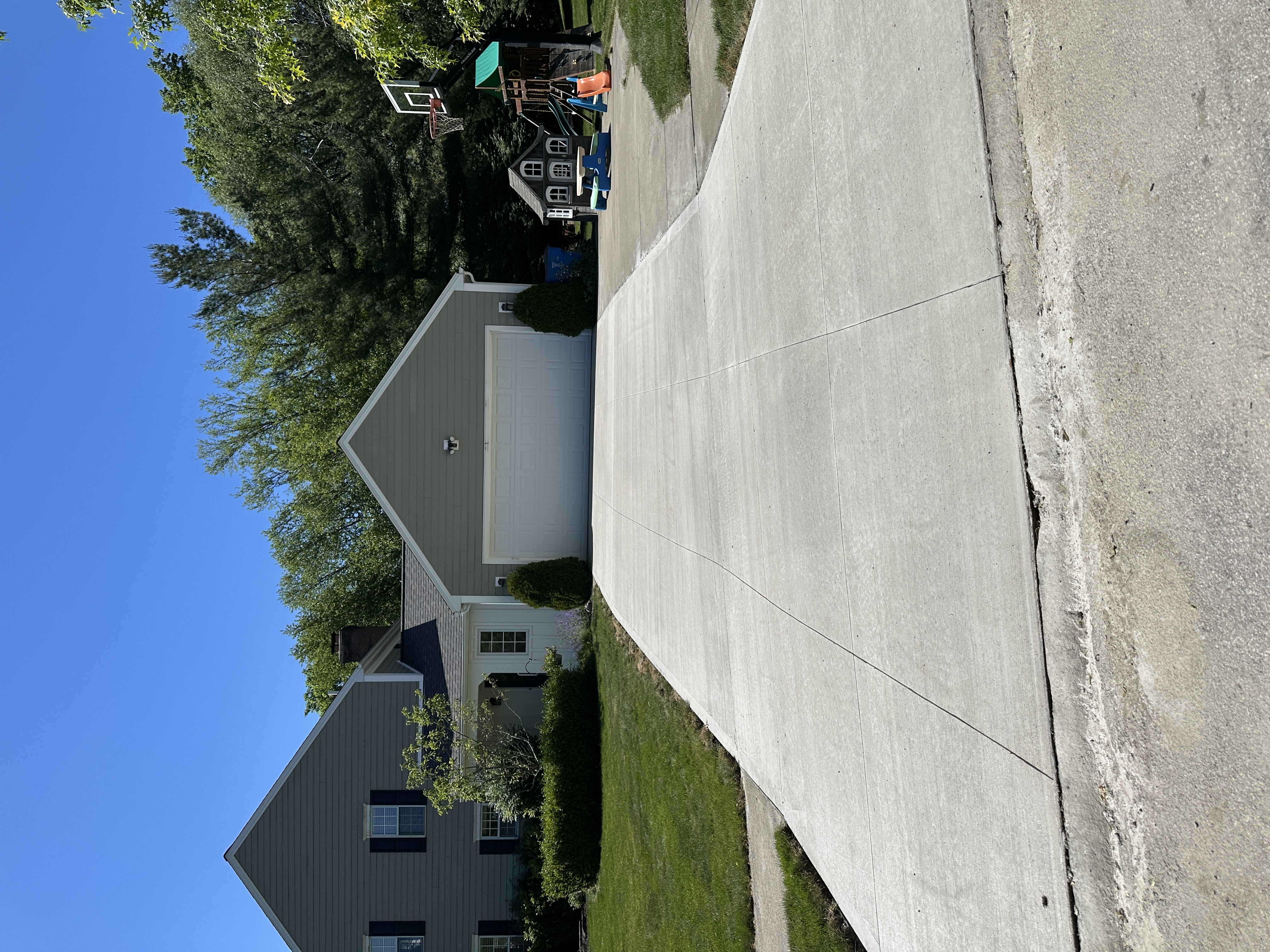
How Long Does a Concrete Driveway Last in Ohio?
A concrete driveway built right should outlast most of the cars that park on it. Some don’t make it 10 years. The difference almost always comes down to what happened before the concrete truck showed up.


The Short Answer
With a solid base, the right mix, and regular sealing, a concrete driveway in Northeast Ohio can last 30 years or longer. Without those, it can start cracking, sinking, or flaking within a few winters.
What Makes a Driveway Last
A compacted stone base: We dig 8 to 10 inches below finished grade and put down 4 inches of angular #304 limestone, compacted until it’s firm. Most early failures start with a weak base.
The right thickness: 4 inches for cars, and 5–6 inches for the apron and for driveways that carry work trucks, RVs, or trailers.
Air-entrained concrete: We pour a 4,000+ PSI air-entrained mix. The tiny air bubbles give freezing water room to expand, which keeps the surface from flaking.
Reinforcement and joints: Wire mesh holds the slab together, and control joints give it a place to crack in a straight line instead of at random.
Drainage: A driveway pitched so water runs off it, not under it, keeps the base from washing out or heaving.
What Shortens It
Thin slabs poured on loose soil or old gravel. Skipped reinforcement. Water that sits on the surface or runs under the edges. Heavy trucks on a slab built for cars. Years of road salt on concrete that was never sealed.
Most of these are decided on installation day, which is why two driveways poured the same year can look completely different ten years later.
How to Add Years to Your Driveway
Keep cars off new concrete for 7 days, and keep heavy trucks off it for the full 28.
Apply a penetrating silane-siloxane sealer about 28–30 days after the pour, then every 3–5 years.
Rinse road salt off with a garden hose every spring.
Skip deicing salt during the driveway’s first winter and use sand for traction. Never use deicers or fertilizers that contain ammonium nitrate or ammonium sulfate, because they attack concrete.
Keep the edges backfilled so water can’t run under the slab.
Signs It’s Time to Replace
Hairline cracks are normal and don’t mean the driveway is failing. Replacement starts to make sense when sections have sunk or lifted, cracks are wide or one side sits higher than the other, the surface is flaking over large areas, or water pools in the same spots after every rain.
Want a Driveway That Lasts?
We’ll look at your property, tell you what thickness and base it needs, and give you a free written estimate.
Good to Know
Frequently Asked Questions
How long should a new driveway cure before I drive on it?
Walk on it after 24–48 hours, and wait 7 days before driving or parking on it. Concrete reaches about 70% of its strength in a week and full strength around 28 days, so keep heavy trucks off it until then.
Does sealing really make a difference?
Yes. In Northeast Ohio the biggest threat to a concrete surface is salt water soaking in and freezing. A penetrating sealer keeps most of that water out, and it costs very little compared to what it protects.
Is an old driveway worth repairing?
It depends on the base. If the slab is mostly level and the damage is on the surface, cleaning and sealing can buy more years. If sections are sinking or heaving, the base has failed and patching won’t hold. We’ll tell you which one you’re looking at.
Request your free estimate
Tell us about your driveway, patio, garage floor, or walkway. We’ll get back to you within 24 hours with clear pricing and no pressure to commit.
Call (440) 720-1175Prefer to talk? Guy answers Monday–Saturday.