
Is an Epoxy Garage Floor Worth It in Ohio?
An epoxy floor makes a garage easier to clean and better looking, but the real reason to do it in Northeast Ohio is protection. Bare concrete soaks up salt, oil, and slush all winter. A good coating keeps all of that on the surface.


What You Get
A sealed surface that salt, oil, and antifreeze can’t soak into.
A floor you can sweep and mop instead of scrubbing at stains.
A brighter garage, since the floor reflects light instead of soaking it up.
A finish that hides small pits and cracks in older concrete, especially with full flake.
Why Most DIY Kits Peel
Most garage coatings that fail were never bonded properly. Hardware store kits usually rely on acid etching, so the coating sits on top of the concrete instead of gripping into it. Hot tires soften it and pull it up. That’s called hot tire pickup.
We grind the floor with diamond tooling instead of etching. Grinding opens up the surface so the resin soaks into the concrete and bonds to it.
Full Flake or Metallic
For a working garage, we recommend our full flake system. We cover the whole wet base coat with flakes until it can’t hold any more, then seal it with a clear topcoat. The flakes add thickness, hide wear, and give the floor a slight texture for grip.
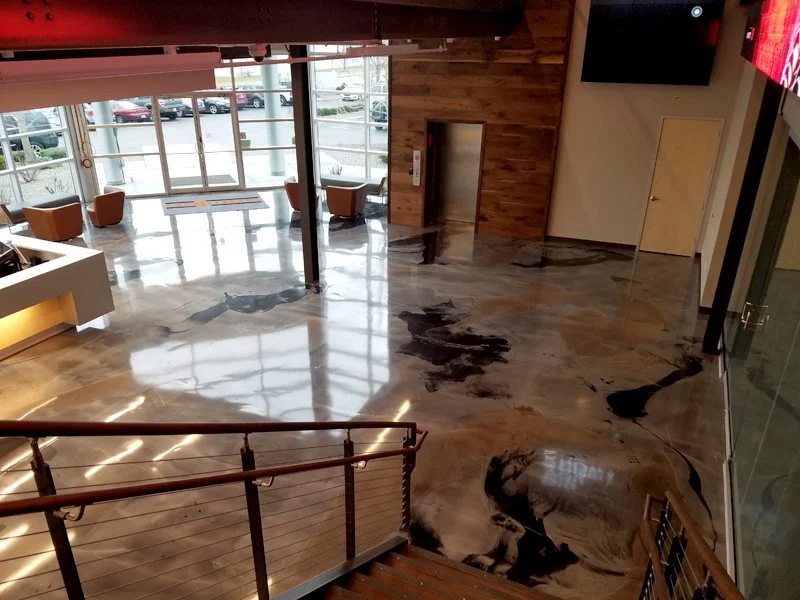
Metallic epoxy has a glossy, marbled look that works well in basements, showrooms, and lobbies. In a garage it shows scratches from road grit and dragged tools, so it usually isn’t our first suggestion there.
Why the Topcoat Matters
We use a polyaspartic topcoat. It’s UV stable, so sunlight through the garage door won’t turn it yellow, and it cures faster than standard epoxy, so you get your garage back sooner. It also holds up better to abrasion and chemicals.
What It Takes
Most residential garage floors take 1 to 2 days, depending on size and how much crack repair is needed. You can walk on it after 24 hours and park on it after 48–72 hours.
If the slab itself is cracked, sunken, or heaving, a coating won’t fix it. In that case we’d replace the floor first and coat it once the new concrete has cured for at least 28 days.
Thinking About Coating Your Garage?
Tell us roughly how big your garage is and we’ll give you a clear quote.
Good to Know
Frequently Asked Questions
Is an epoxy floor slippery when it’s wet?
Smooth, high-gloss epoxy can be. Full flake floors have a slight texture that grips better, and we can add a non-slip additive to the topcoat for more traction.
Can you coat a brand new garage floor?
Yes, once it has cured for at least 28 days. Our hard-trowel finish is the right surface for an epoxy system.
Will road salt hurt an epoxy floor?
No. A sealed floor with a polyaspartic topcoat keeps salt and slush on the surface, where you can rinse or squeegee it off. Keeping salt out of the concrete is one of the main reasons people coat their garage floors here.
Request your free estimate
Tell us about your driveway, patio, garage floor, or walkway. We’ll get back to you within 24 hours with clear pricing and no pressure to commit.
Call (440) 720-1175Prefer to talk? Guy answers Monday–Saturday.